Vibrosa Mini
Honey Play Box's app-controlled wearable egg, launched March 2026 as the smaller sibling of the full-size Vibrosa. Dual motors, a pressure sensor that's supposed to answer your pelvic floor, and an LED tail aimed at the cam-performer crowd. We've had it in rotation for several weeks: Sasha wearing it, Daniel holding the phone.


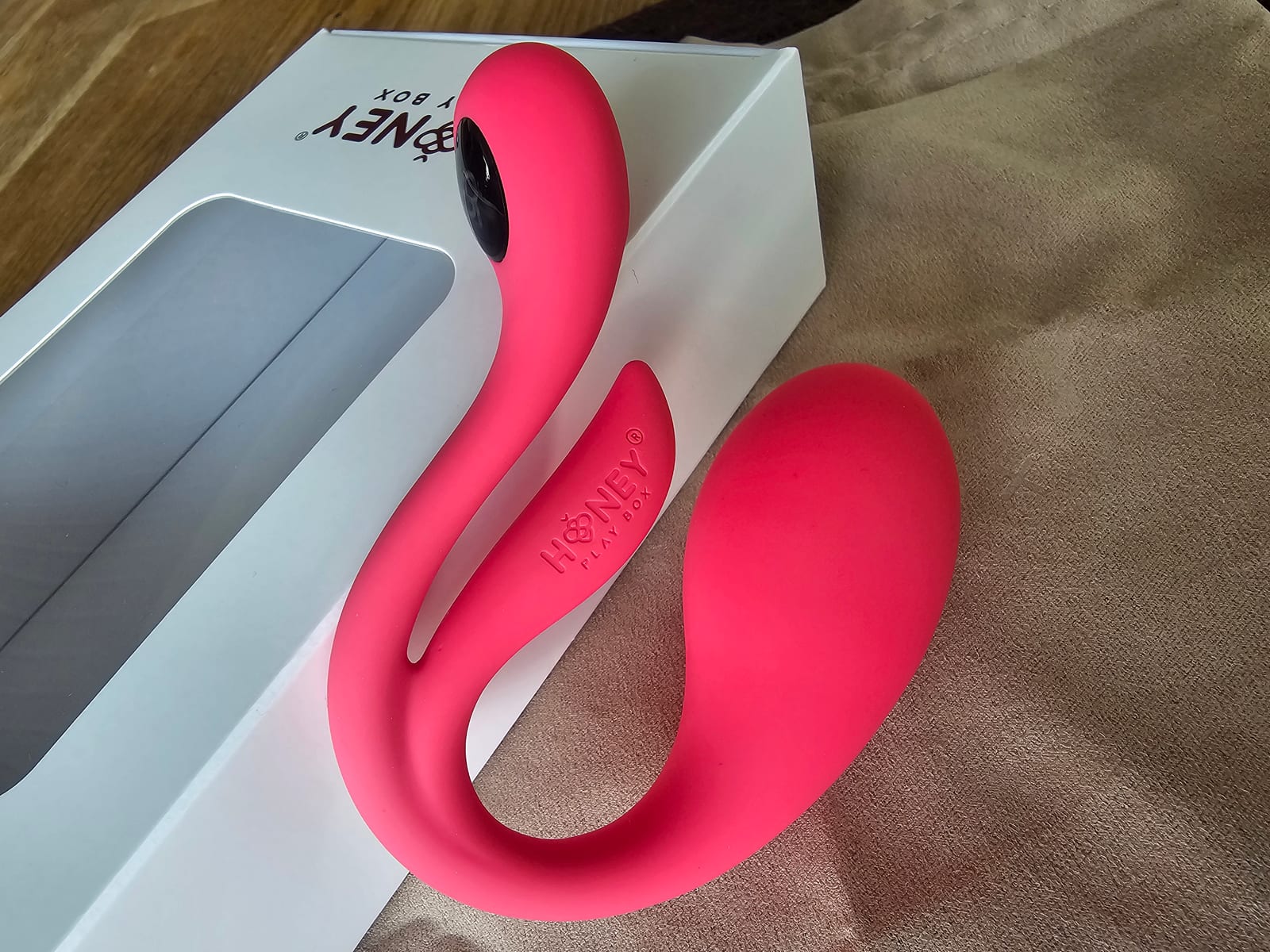
The pressure sensor answers a deliberate clench with more vibration, most of the time and with a beat of delay. That partial reliability turns out to be plenty: more vibration invites another clench, which brings more vibration, and one of our sessions ended noticeably sooner than the wearer had planned. Full breakdown in the pressure-sensing section.
The Vibrosa Mini does the two hard things well: it connects instantly and stays connected, and its signature pressure sensor works often enough to create a feedback loop that's more fun than the spec sheet suggests. The motor is rumbly beyond its size, the fit locks in and survives movement, and the quick-charge promise delivers exactly what it says. The weak spots are familiar wearable territory rather than dealbreakers. Sitting interrupts the external arm's contact, the app wants an account, and the charging cable prefers a flat surface. None of it has been enough to move the toy out of our rotation, and that's the sentence that matters. An easy recommendation for solo and partner-controlled wear, and priced fairly at $119.99 for what it does.
Per-tester scores — anatomy matters, so we score separately on purpose.
Unboxing & first impressions
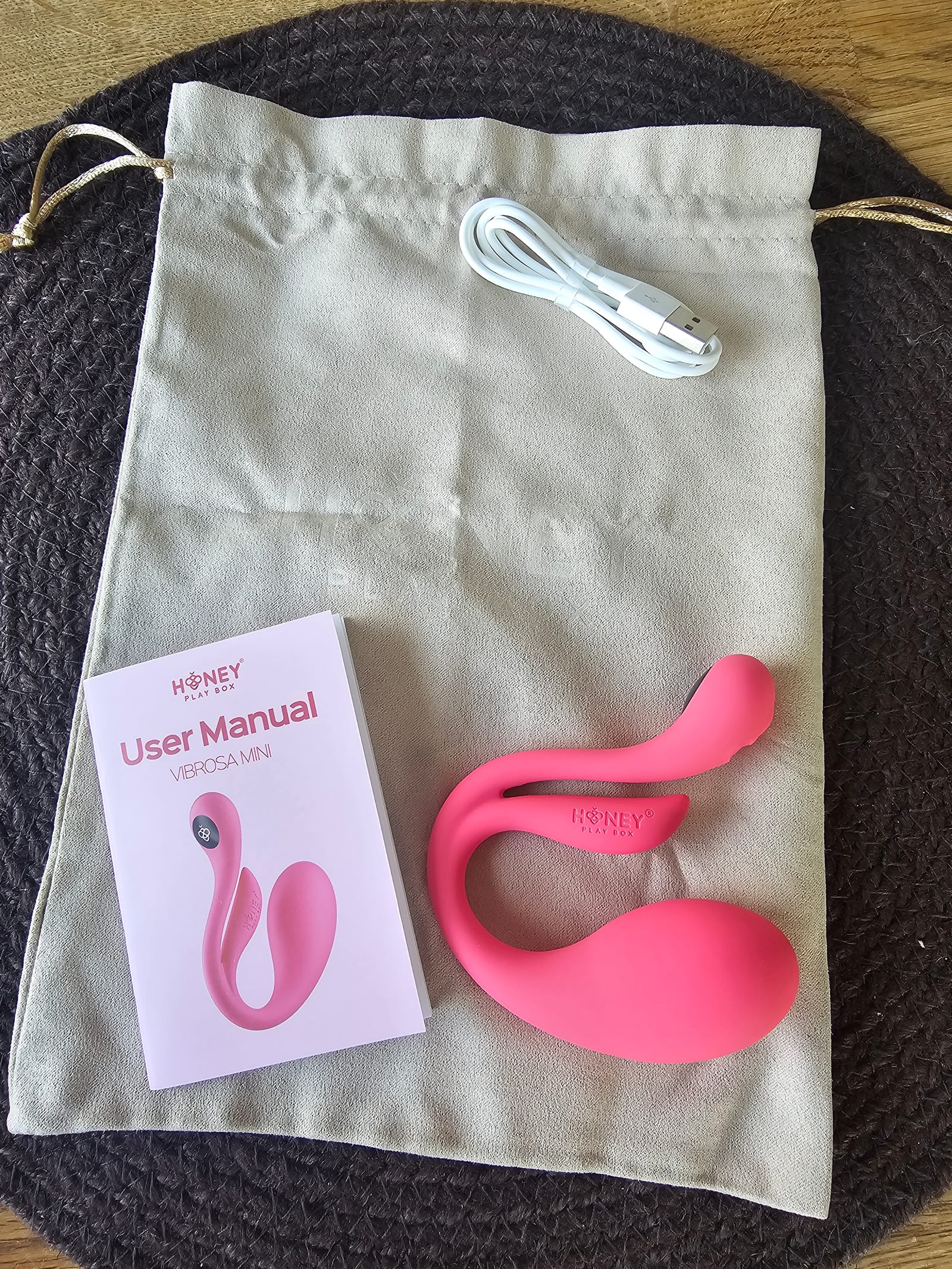
The silicone came out of the box smelling of nothing. That's the correct smell for body-safe silicone on day one and it still deserves saying, because plenty of budget toys arrive with a chemical cloud that takes a week to fade. The matte surface picks up lint if you leave it on bedding, which is true of nearly every matte silicone toy we own and no worse here.
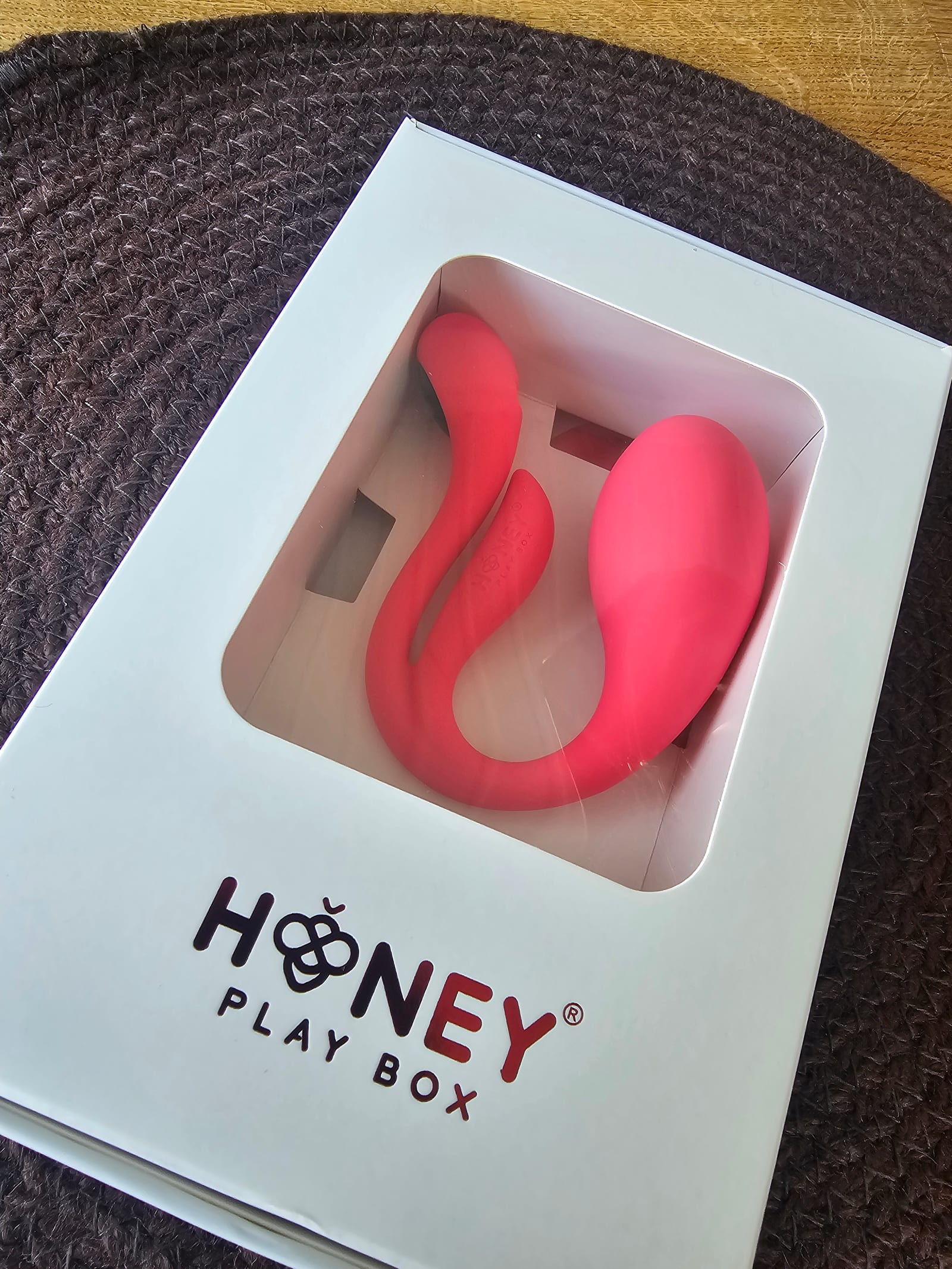
It also deserves saying that this is a lovely little object. The soft pink body curves like a resting bird, the proportions read more like jewelry than gadget, and the first word spoken out loud at unboxing was cute. A lot of this category looks like medical equipment or a race car; the Vibrosa Mini would sit on a nightstand as a design piece until someone picked it up and asked. Prettiness isn't why you buy a vibrator, but living with one you like looking at turns out to be a small daily pleasure of its own.
One pleasant surprise against the reviews we'd read: an early reviewer complained the printed manual is too small to read and pointed everyone to the QR code instead. The print is small. It is also readable, and a QR code leads to a PDF for anyone who disagrees.
The accessory pouch is the quiet winner of the box contents. Most included pouches are packaging cosplay; this one is in actual use in our drawer weeks later.
The app: one-second pairing, one mandatory account
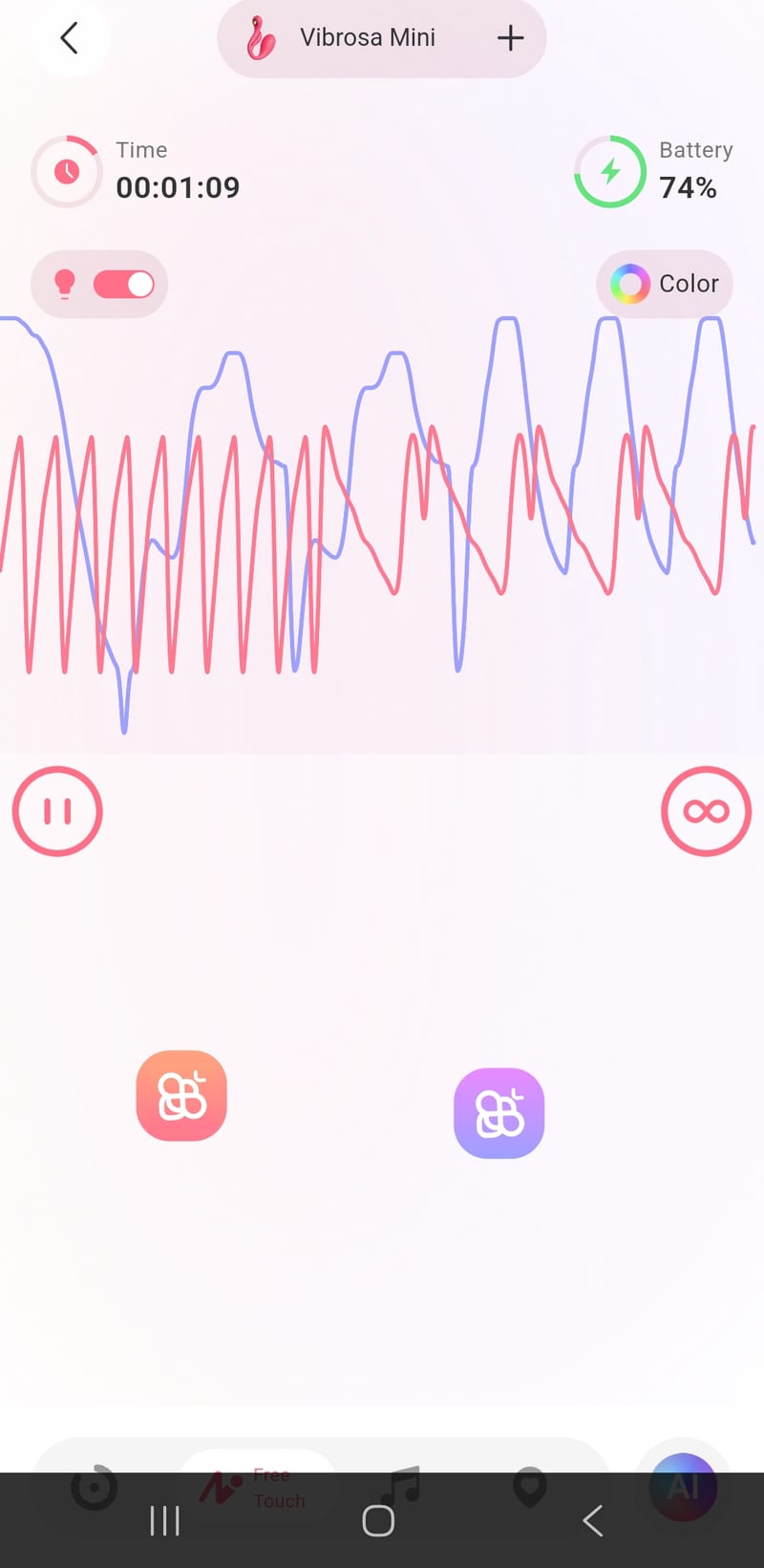
Going in, the app was our biggest worry. The HoneyPlayBox app holds a 2.3-star rating on iOS and about 2.7 on Android, and the reviews describe exactly the failure that kills app toys: pairing that doesn't, connections that drop after a minute. So the actual experience was disorienting: the toy appeared in the app in roughly one second, on the first attempt, from a good distance away, without the manual being opened. Across several weeks of sessions since, the connection has dropped zero times.
That includes the test that matters for long-distance ambitions. Daniel sat on the sofa downstairs, Sasha was in the bedroom upstairs, and at least one wall and a floor stood between them. Control stayed responsive enough that he could react to what she said in real time. Whatever is wrong with this app for the one-star reviewers, our unit and our phones never met it.
Now the costs. You must create an account with an email address before the app lets you control anything, which is one account more than a vibrator needs. The permission requests were less alarming in practice than Google's data-safety label suggests (position for the connection, microphone only if you use voice control; we were never asked for photos). But the label says what it says, and if app privacy matters to you, use a throwaway email and skip the social features.
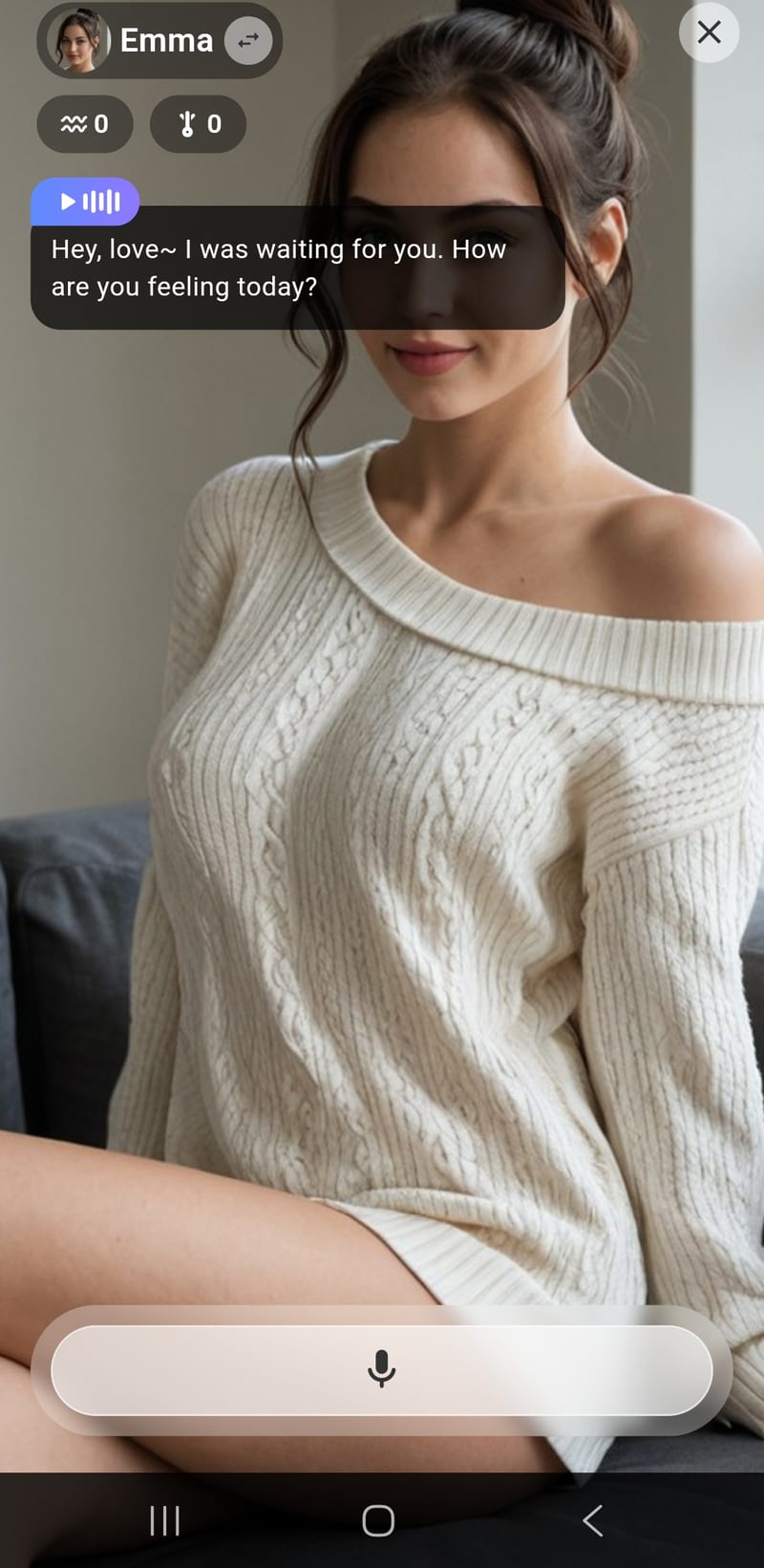
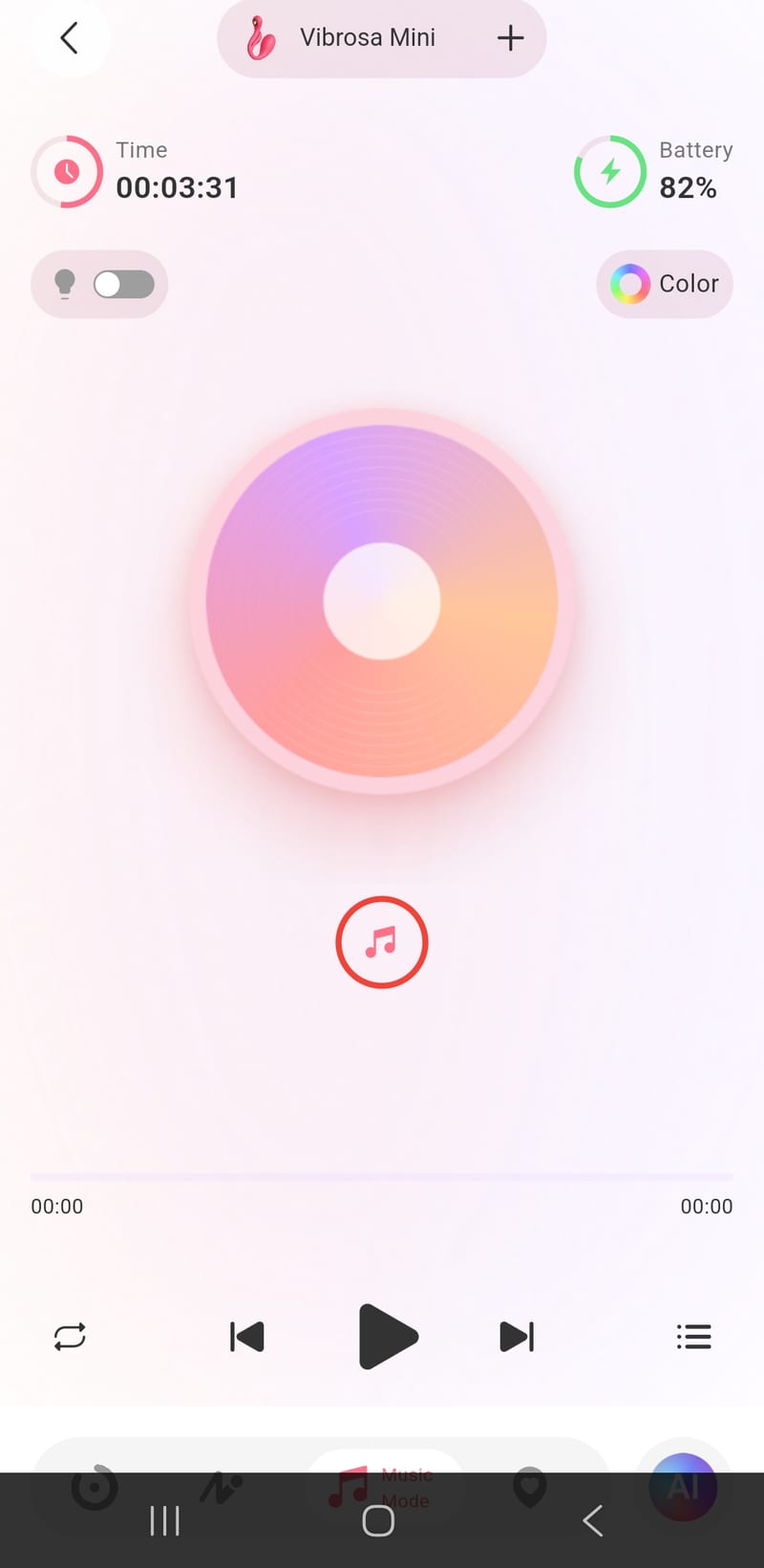
The features sort themselves fast. Free-draw, where you drag a finger and the toy follows your line, is what Daniel ended up using for nearly everything. It's the difference between playing an instrument and pressing preset buttons. Both motors get their own independent dial, which matters once you learn which arm does what for the person wearing it. Music sync we could not get to function at all. The player screen sat at 00:00 with nothing loadable no matter what we tried. And the AI companion ("Emma", who opens with "Hey, love~ I was waiting for you. How are you feeling today?") got exactly one curiosity visit that lasted under a minute. We suspect that's the standard user journey.
One piece of visible sloppiness shows up on the Samsung Galaxy S24 we run the app on, where the bottom tab bar renders half-hidden behind Android's own gesture bar. The labels for Presets and Free Touch sit clipped under the system pills on most screens. Everything still responds to taps; it just looks like nobody tested the layout on one of the world's most common phones.
One honest gap: we haven't tested whether the button alone offers a steady constant vibration without the app. On the full-size Vibrosa the button only cycles presets and steady mode is app-locked, an arrangement three separate reviewers found annoying. If buying this to use app-free is your plan, check that first.
The pressure sensor: mostly works, and mostly is enough
This is the feature the product is named for and the one with the worst track record. On the full-size Vibrosa, three of the five independent reviewers we could find couldn't get the pressure response to work at all. So we tested it the skeptic's way first: squeeze the egg in your hand and watch. It responds, visibly.
Worn, the picture is more textured. A deliberate clench raised the intensity most of the time, not every time, and with a beat of delay rather than instantly. Simply shifting position barely registered, despite the marketing's posture-reactive framing. If you're scoring the sensor against its own advertising, that's a partial.
But scoring it that way misses what actually happens in use. More vibration invites another clench. Another clench brings more vibration. That loop is self-reinforcing in a way a static pattern isn't, and it works even when the sensor catches only most of your input. One of our sessions ended distinctly ahead of schedule because of it, which matches an early reviewer who noted the same speed-up with what read like mild logistical regret. As a spec-sheet feature it's imperfect. As a thing that happens to you, it delivers.
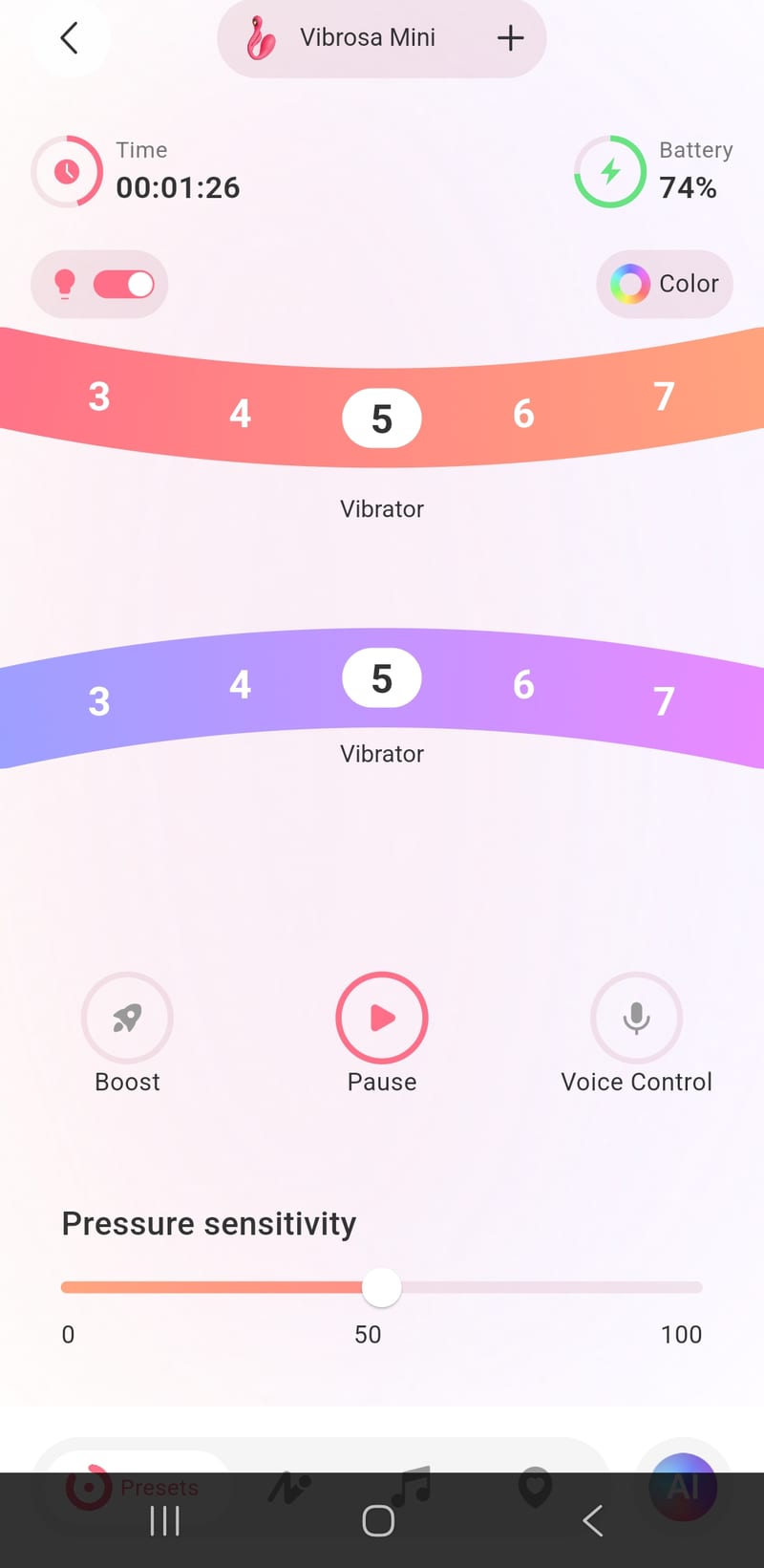
Worth knowing from the app side: pressure response isn't a simple on-off switch. The app exposes a sensitivity slider running 0 to 100, so how eagerly the sensor answers is adjustable rather than fixed. If it feels lazy or trigger-happy at your setting, the dial is where to look before blaming the hardware.
Motor & fit
The motor is the rumbly kind. You feel it inward through tissue rather than buzzing on the surface, which at this size is not a given: small eggs are usually where buzzy motors go to hide. Nine modes plus free-draw, and the top of the intensity range went unused in our testing; there was more power available than needed, which is exactly where you want the ceiling to be.
The shape earns its keep in two places. The 8 mm neck creates a distinct moment where the egg seats itself and locks in: you know when it's placed, and it doesn't wander afterwards. And the external arm landed on the right spot without being held there or adjusted, which sounds basic and fails constantly in this category. A note on the character of that contact. The arm's touch is present but not aggressive, and for Sasha, who has never loved intense direct clitoral contact (the reason air-pulse toys suit her), that softer landing was the right calibration rather than a shortcoming. If you need firm direct clit pressure from a wearable, weigh that.
Did it finish the job? Yes: during partnered play, with Daniel and the toy working together. Not a solo-only data point, and we're reporting it as what it was.
Wearing it around the house
Walking: stays put. Stairs: stays put. A full squat: still seated where it was placed, with the neck doing visible work. As a wearable in motion, the Mini passes the tests that make most of this category fail, and at 72.6 grams you stop noticing the weight almost immediately.
Then you sit down, and the external arm loses its contact. This is the known geometry problem of every insertable-plus-external-arm design and the Mini doesn't solve it. Standing and moving, the whole system works; seated on a chair, the internal egg keeps doing its job while the external arm goes on break. If your fantasy for this toy is a long restaurant dinner, that's the physics you're signing up for.
Battery, the cable, and the disco tail
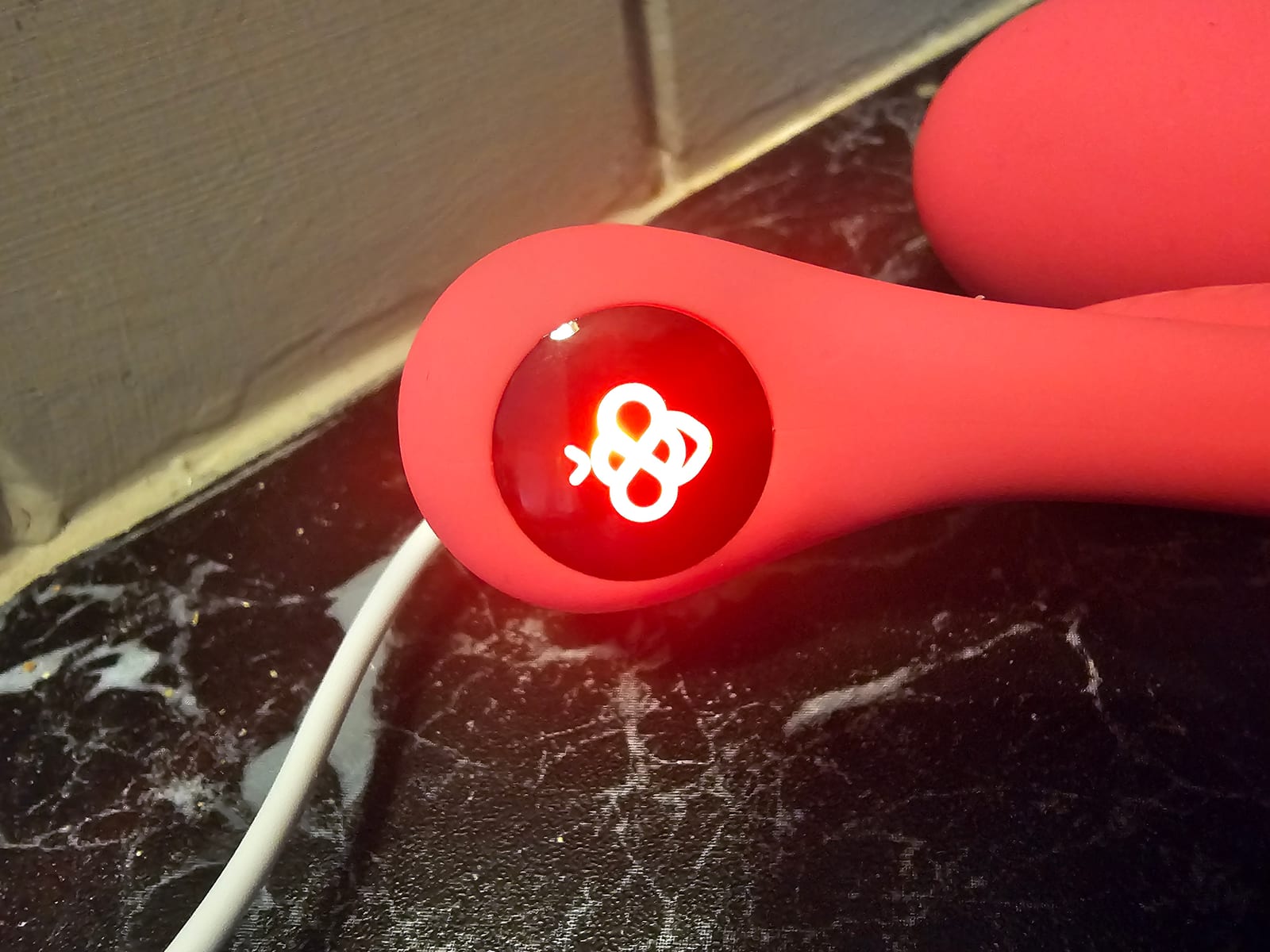
Battery life has not been a constraint. A full evening session ended with the app still showing comfortable charge, consistent with the 90-400 minute claim, and we haven't managed to run it flat mid-anything. Charging takes under an hour.
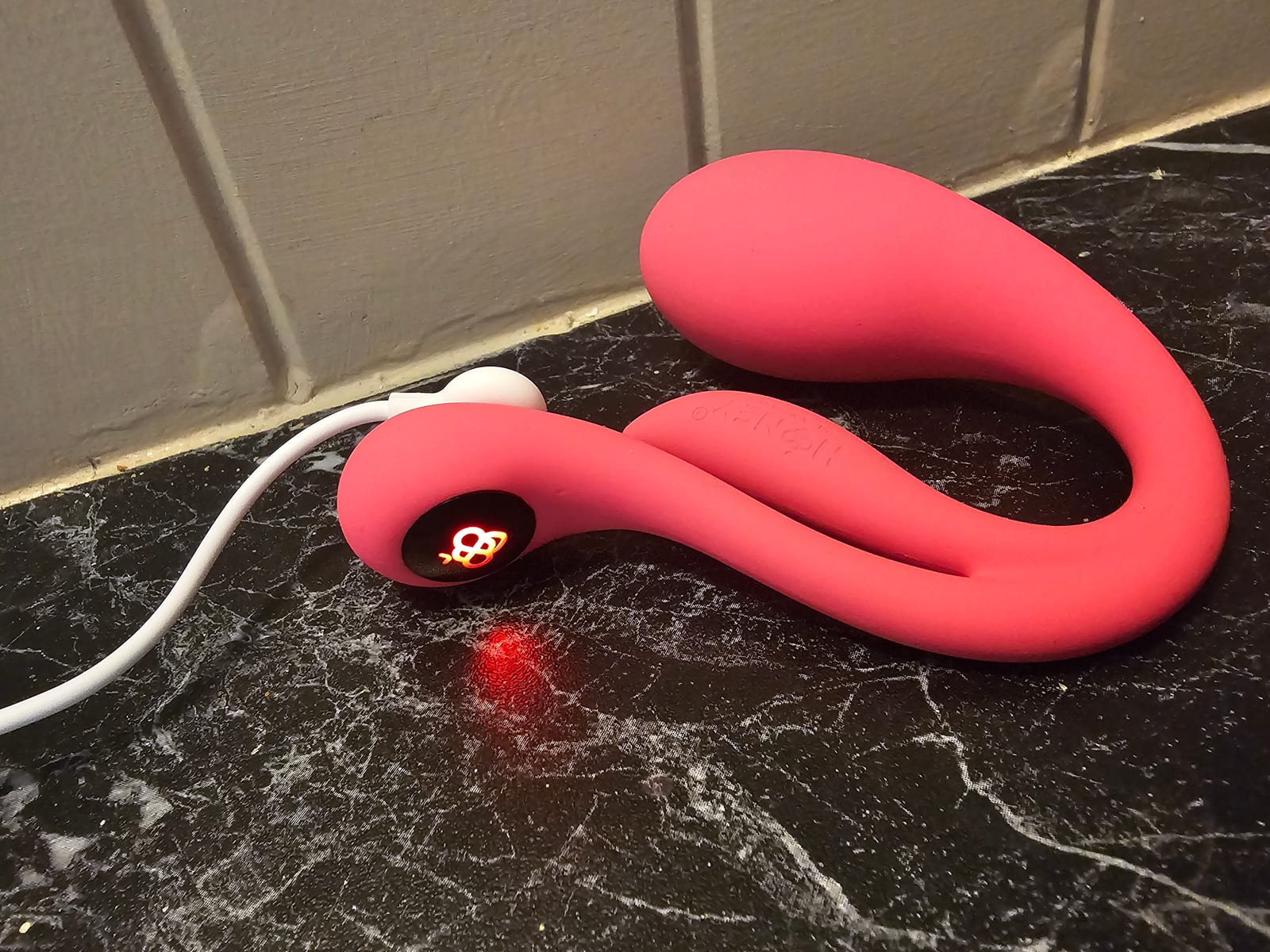
The cable is the weak point. It's a proprietary two-pin magnetic connector, no spare is sold, and the magnet's grip loses to gravity. If the cable sits under any tension, it pops off and the toy quietly doesn't charge. This happened to us several times before we learned to lay it flat and check the LED. A toy this dependent on one irreplaceable cable should ship with two.
The LED tail: we tried the colors, laughed, and turned it off for the rest of the session. It's aimed at cam performers, where a vibration-synced light viewers can see makes commercial sense, and Honey Play Box markets it exactly there. In a bedroom it's a party trick. A harmless one, and at least it can be disabled, which the full-size Vibrosa's reviewers didn't always find intuitive.
I did not expect the egg category to produce my favorite new arrival of the year. Eggs are usually where you learn the word buzzy. This one hums somewhere lower, the neck clicks it into a spot where it stays through stairs and squats, and the external arm lands with the kind of soft contact my body actually wants — direct-and-hard has never been my thing, which is half of why air-pulse owns my nightstand.
The pressure thing is the part I keep coming back to. It doesn't catch every clench, and there's a lag, and none of that matters in practice, because the loop it creates does something no preset pattern has done to me: it made the toy feel like it was answering. One evening it answered so well I was done before I'd intended to be. I have decided to be impressed rather than annoyed.
It loses points for chair-sitting, where the arm simply gives up, and for the charging cable, which detaches if you look at it sideways. Neither has been enough to move it out of rotation. It's still there. That's the review.
My seat for this review was the sofa, phone in hand, one floor and a wall between me and the person wearing the hardware. Given the app's store ratings I'd budgeted an evening for troubleshooting. The pairing took a second, the connection never dropped in several weeks, and I have no explanation that survives contact with those one-star reviews except that our unit works and theirs apparently didn't.
Free-draw is the feature. You drag a finger up and down and the toy follows the line, live, while the person upstairs reacts to what you draw. Every preset pattern became irrelevant the moment I found it. Music sync never worked at all, and the AI chat is the most embarrassed I've felt on behalf of an app this year.
Mid-sex, the toy and I had the same disagreement I had with the Nina: I don't like hardware in the middle of things, and that opinion is apparently permanent. Outside of that one context there's little to hold against it. The account requirement is unnecessary, the cable is a design mistake, and the LED exists for a job that isn't ours. The parts that count, the motor and the connection, are better than the price says they should be.
During sex
We tried it during penetrative sex, because the wearable form invites the idea. The honest report: Sasha came with it in. Daniel then had it removed before he finished, for the same reason he gave in the Nina Vibe review. Hardware between two people mid-act distracts him more than it adds, and that stance has now survived two products. She got hers with the toy, he got his without it, and both of those things are fine.
The distinction that emerged is that this is a wearable toy which tolerates sex rather than one built for it. Its best partnered mode is the one it was clearly designed around, with one person wearing it and the other holding the phone, no penetration logistics involved. For a toy built specifically for during-PIV use, the We-Vibe catalog remains the address.
Where it sits in the market
The obvious rival is the Lovense Lush 4 at $129, the reigning wearable in the app-controlled category. Lovense still wins the app war: bigger ecosystem, more integrations, and a decade of long-distance infrastructure the HPB app doesn't match. What the Lush doesn't have is a pressure sensor, and nothing in Lovense's catalog produces the squeeze loop. At $119.99 it comes in under the Lush 4, so the real choice is app ecosystem versus interactivity.
Its own big sibling, the full-size Vibrosa, is a deeper double-egg design reaching G and A zones, 92 grams, and reviewer consensus says its pressure sensor is less reliable than what we experienced on the Mini. Unless deep dual-ball fullness is specifically the goal, the Mini looks like the better-sorted product of the two.
At $119.99 the package is strong on the merits alone. Instant reliable pairing, a pressure sensor that does something no direct competitor offers, a composed motor and a wearable fit that survives real movement is a lot of product for the money.
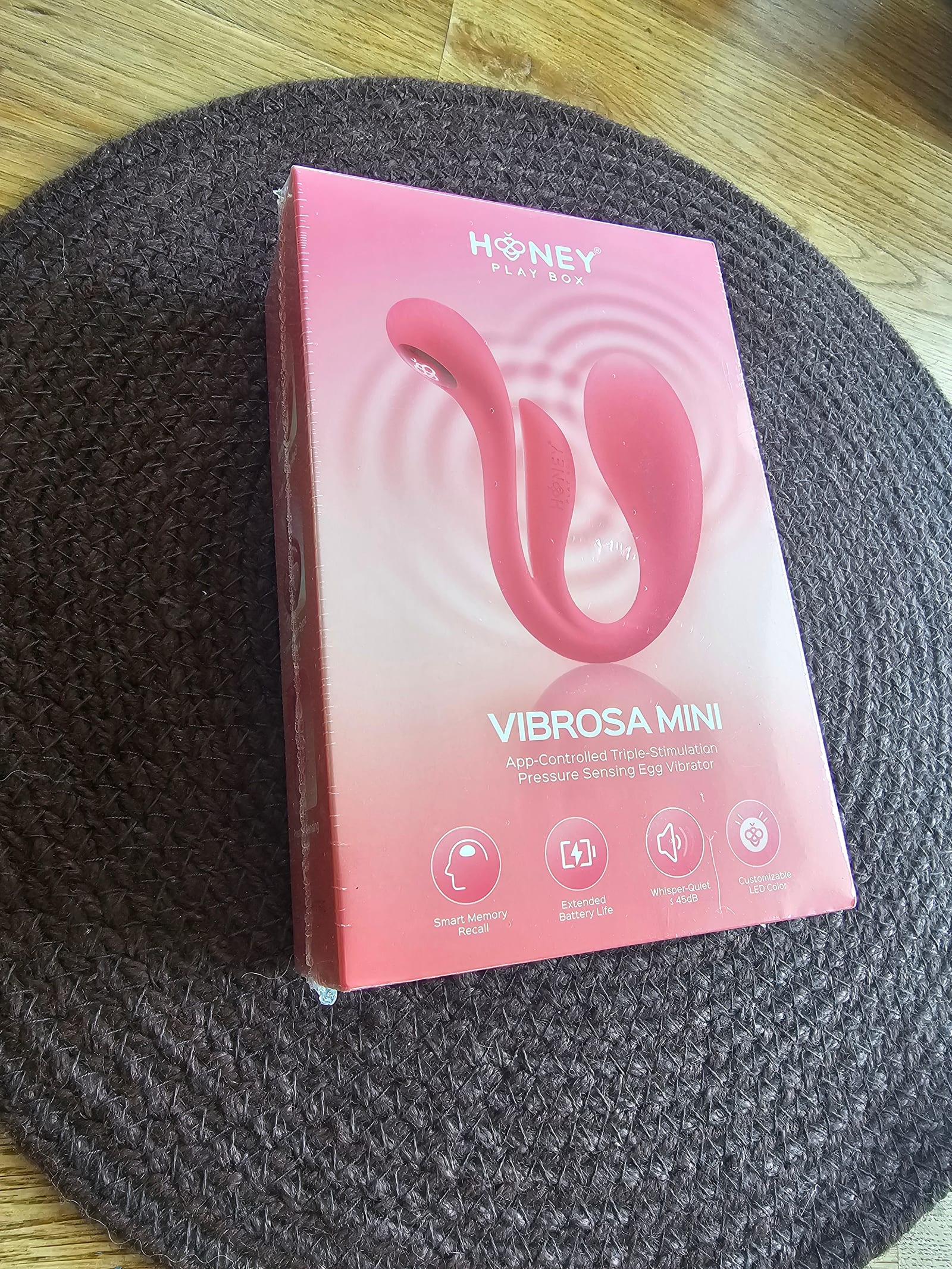
Several weeks of regular use, both partners. Sasha wore it; Daniel ran the app, including cross-floor remote sessions. No lab measurements; the claims table reflects home conditions. Music sync retested across multiple sessions before being marked as failed.