

Beginner BDSM Kit: What to Buy (and What to Skip)
 Published Updated 12 minBuying Guide
This guide contains affiliate links. If you buy through one, we earn a commission at no extra cost to you. It never changes a pick. How we make money
Top picks
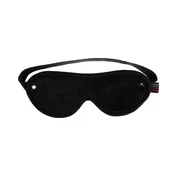 SENSATIONLovehoney Beginners Soft Blindfold$12.99Buy nowOur review
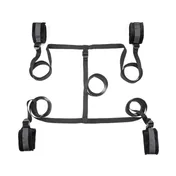 RESTRAINTSSportsheets Bed Bondage Restraint Kit$41.99Buy nowOur review
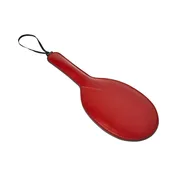 IMPACTSportsheets Saffron Ping Pong Paddle$29.99Buy nowOur review
Every "50-piece BDSM starter kit" on Amazon is the same: a satin blindfold that slides off your face, handcuffs lined with fur that smells like a chemical spill, a flogger with all the impact of a feather duster, and a ball gag that tastes like a tire. Twenty bucks for a zippered pouch of garbage. You use it once, half-laughing, then it lives under the bed forever.
I bought one of these bundles out of curiosity, and the pattern holds: 10-15 items made from the cheapest possible materials, almost none of which perform their actual function well. The blindfold was the only piece I kept, and even that slid off when I turned my head. The restraints aren't adjustable. The paddle stings your hand more than anything it hits. You'd get a better experience blindfolding your partner with a clean t-shirt and using a wooden spoon from the kitchen.
Building your own kit costs roughly the same as a bundled one, and every piece actually works. The trick is knowing which categories matter for beginners and which ones are advanced territory that you don't need to rush into. If you're building a full collection beyond BDSM gear, the complete sex toy guide covers every category. Six items for about $130, or four for under $100, and you'll use all of them.
Sensation Play Basics
Sensation play is where most people should start because it requires zero pain tolerance, zero experience with power dynamics, and almost zero risk of anything going wrong. You're just making your partner's nervous system light up.
A blindfold changes everything. Remove one sense and the remaining four go into overdrive. Every touch becomes unpredictable. A fingertip across a collarbone feels electric when you can't see it coming. Skip the satin sleep masks (they slide around) and get a proper blindfold made for the bedroom, not the plane. The Sportsheets Soft Blindfold runs about $11, fits most heads, and actually blocks light, which is the entire point. On Amazon, Lovehoney's Bondage Boutique Beginners Soft Blindfold ($12.99) is the same idea: light neoprene, not satin.
A Wartenberg pinwheel ($10-14) is a small spiked wheel originally designed for neurological testing. Roll it lightly across skin and it produces a sharp, prickly sensation without breaking the surface. Press hard and it will break the surface, so wipe it with alcohol after every use. Pair it with the blindfold and alternate between soft touches (fingertips, a feather, lips) and the pinwheel's bite. The contrast is what makes it work. Your partner won't know which sensation is coming next, and that anticipation does most of the heavy lifting.
Total for sensation play basics: a blindfold ($13), a massage candle ($16), and a Wartenberg wheel ($13.50). About $42, and you haven't even gotten to the parts most people think of when they hear "BDSM."
Restraints
Restraints are probably what brought you to this guide. Fair enough.
The single best beginner restraint system is the Sportsheets Under the Bed Restraint System. Flat polypropylene straps that slide between your mattress and box spring, with adjustable cuffs at each corner. No drilling, no headboard required, works on any bed, and takes about 3 minutes to set up. When you're not using it, the straps tuck under the mattress invisibly. It's $74 direct from Sportsheets, and their Bed Bondage Restraint Kit ($42) does the same job for less.
| Type | Price | Pros | Cons |
|---|---|---|---|
| Under-Bed System (Sportsheets) | $42–74 | Works on any bed, invisible storage, adjustable | Limits positions to bed only |
| Velcro Cuffs | $12–25 | Quick release, comfortable, beginner-friendly | Velcro wears out, not as secure feeling |
| Leather Cuffs + Panic Snaps | $40–80 | Durable, hold under a hard pull, snaps open under load | Pricier, more gear to manage |
| Rope | $18–50 a length | Most versatile, does things no cuff can | Requires learning ties, safety knowledge |
| Metal Handcuffs | $10–30 | Look cool | Hurt wrists, no quick release, nerve damage risk |
Metal handcuffs are the worst beginner restraint despite being the most iconic. Hard edges dig into wrist bones, there's no quick-release mechanism, and lost keys create a seriously dangerous situation. Use padded cuffs instead.
Why quick-release matters: someone's arms above their head for 20 minutes can lose circulation. Pins and needles, numbness, cold fingers. You need to get them out of restraints in under 5 seconds if something goes wrong. Velcro tears open instantly, and panic snaps open with one hand even while someone is pulling against them, which a carabiner often won't. Lovehoney's padded velcro wrist cuffs ($19.99, adjustable from 5 to 10 inches) and matching ankle cuffs ($12.99) have velcro straps plus quick-release clips, and two D-rings on every cuff, so they clip to each other, to an under-bed system, or to nothing at all. Knots take time you might not have. If you go the rope route eventually (and many people do), keep a pair of safety shears within arm's reach. Every time, not "usually."
For a first purchase, the under-bed system wins on every practical measure. It's the least intimidating setup, it stores invisibly, and the cuffs are wide and padded. You don't need to own a four-poster bed or drill eye bolts into your ceiling. You need a mattress and three minutes. Once the cuffs are on, the bondage for beginners guide covers the rest: positions, fit, and the warning signs a hand gives before it goes numb.
Impact Play
Impact play covers anything involving hitting: spanking, paddling, flogging, cropping. It ranges from a playful smack during sex to things that leave marks for days. Beginners should stay firmly at the lighter end and work up gradually.
Your hand is free and already attached to your body. Spanking with an open palm is the best starting point because you can feel exactly how hard you're hitting. Cup your fingers slightly, aim for the fleshiest part of the butt (the lower curve where it meets the thigh, which spankers call the sit spot, not the tailbone area), and start lighter than you think necessary. Warm up for a few minutes with light, slow strokes before anything harder. Warmed-up skin takes more and enjoys it more. You can always hit harder. You can't un-hit someone.
A paddle ($15-30, leather or faux leather) gives a broader, thuddy sensation compared to a hand. Look for one that's at least 3 inches wide with rounded edges. Narrow paddles concentrate force into a smaller area, which stings more and bruises easier. Wide and flat is what you want for learning. Sportsheets' Saffron Ping Pong Paddle ($29.99) is round and 6 inches across, in vegan leather. If you'd rather have real cow leather, Liebe Seele's paddle is 3.3 inches wide for $42.95.
A riding crop ($10-20) delivers a focused sting. The small leather keeper at the tip concentrates impact into a quarter-sized spot. Crops require more accuracy than paddles because missing your target by two inches means hitting a hip bone instead of soft tissue. Practice your aim on a pillow first. Not a joke.
Floggers are the most nuanced impact toy. A wide leather flogger with many soft falls (the hanging strips) produces a thuddy, almost massage-like sensation. A flogger with fewer, thinner falls stings sharply. For beginners, wide falls and soft leather. Floggers with lots of soft falls are forgiving and look impressive while delivering relatively mild impact. Sportsheets' Brat Flogger ($17.99) is a cheap place to start, with thirty faux leather falls and a wrist loop. A step up, Liebe Seele's cow leather flogger ($45.95) weighs about 6 ounces, enough to lean toward thud. Our Liebe Seele review covers the rest of the store. Watch the tips. Stand too close or swing across the body and they wrap around the side and land on ribs or a hip, which is the classic beginner mark.
Communication & Safety
BDSM without communication isn't kinky, it's just unsafe.
Safewords are non-negotiable. The traffic light system works because it's simple: "green" means keep going, "yellow" means slow down or ease up, "red" means stop everything immediately. "Red" is not a suggestion. It's not "red means let's discuss whether to continue." It means hands off, restraints off, immediately. Both partners need to be able to say it and both need to respect it without hesitation or guilt.
Leave gags out while you're learning. If someone can't speak for any reason, establish a non-verbal signal before you start. Dropping a ball, tapping three times, specific hand signals. Agree on this sober and clothed, not in the moment.
Aftercare is the part that BDSM beginners skip most often. After an intense scene (even a mild one by experienced standards), both partners can experience a rush of endorphins followed by a drop. The person who was restrained or receiving impact may feel vulnerable, shaky, or weirdly emotional 20-60 minutes later. Blankets, water, physical closeness, talking about what worked and what didn't. This isn't optional and it's not just for the submissive partner. The dominant partner needs processing time too.
Talk about boundaries before you're naked. What's on the table, what's off limits (your hard limits), what sounds interesting but scary (soft limits, which get discussed more before trying), and whether marks are OK and where. A 5-minute conversation prevents the kind of bad experience that makes people swear off kink entirely. The National Coalition for Sexual Freedom publishes a one-page negotiation guide you answer together, covering roles, safewords and gestures, the kinds of play you want, marks, aftercare and health issues. It feels clinical the first time. It prevents disasters.
The Shopping List
Here's what I'd buy to build a complete beginner kit. Prices are what each shop listed on October 25, 2026.
We earn a commission on some of these links.
Light neoprene shaped around the nose, so it actually blocks light. The foundation of sensation play.
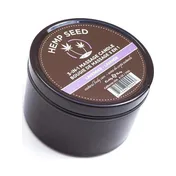 Earthly Body 3-in-1 Massage Candle$15.99SENSATION
Soy and hemp seed oil that melts into warm massage oil. Two-in-one foreplay, and one tin burns for up to 60 hours.
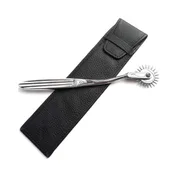 KinkLab Wartenberg Pinwheel$13.50SENSATION
Stockroom's own wheel, with a leather sheath over the pins. Neurological tool turned sensation toy, and a prickly contrast to soft touches.
Works on any bed, hides under the mattress, soft cuffs. The best $42 in beginner BDSM.
- Sportsheets Saffron Ping Pong Paddle$29.99IMPACT
Round, 6 inches across and wrapped in vegan leather. Broad surface, thuddy impact, easier to aim than a crop.
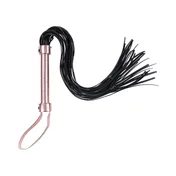 Sportsheets Brat Flogger$17.99IMPACT
Thirty faux leather falls and a wrist loop for under $20. Practice your swing on a pillow before you aim it at a person.
Product photos: Lovehoney, Earthly Body, KinkLab, Sportsheets.
Grand total: about $132. Pick one impact toy instead of two and drop the massage candle (an ordinary candle is not a substitute, because many melt far hotter, beeswax and dripless ones above all), and you're at $86 with the flogger or $98 with the paddle. The restraint system and blindfold are the two items I wouldn't cut.
Where to buy: Sportsheets sells its pieces direct, Stockroom carries the pinwheel and the candle, and Lovehoney's house-brand basics are decent quality for the rest. Avoid Amazon bundles. The individual items from known brands cost the same and don't come with six useless extras stuffed in a faux-leather pouch.
Material note: anything touching skin for extended periods should be body-safe. Silicone, real leather, Medical-grade siliconeSilicone that passed tests for medical devices. On a toy listing it's a claim unless the maker shows the papers, and it doesn't say how the silicone was cured. More in the glossary stainless steel. Cheap faux-leather flakes and peels. Plastic buckles crack. This matters more for cuffs and gags than for items that only contact skin briefly, but it's worth checking. My body-safe materials guide covers the details for toys; the same principles apply to gear. Leather and suede can't be fully disinfected, so a flogger or cuff that has touched blood or other fluids stays with that one person.
What to Add Next
Once you've used the basics and figured out what you both enjoy, a few upgrades worth considering.
Rope. The Twisted Monk makes hemp and cotton rope specifically for bondage, in the standard 6 mm, and posts free video tutorials. Its Curiosity Kit ($94.99) has one 30-foot and two 15-foot lengths and a pair of EMT shears. But rope bondage has real risks: nerve compression, circulation loss, suspension injuries. Take a class, go to a local rope jam, or watch reputable video tutorials (Twisted Monk's own videos, TheDuchy.com) before tying anyone up. Don't learn from porn. Porn rope work is often unsafe and relies on editing to hide the parts where someone's hands turned blue.
Nipple clamps. Start with adjustable ones, tweezer-style with a sliding ring or clamps with a tension screw, like NS Novelties' Bound C2 ($11.95). Clover clamps come later, because they don't adjust and they bite harder the more they're pulled. Start loose. The pain hits hardest when you remove them, not when you put them on, because blood rushes back to the compressed tissue. Leaving them on more than 15-20 minutes risks tissue damage, and practice doesn't raise that limit.
Positioning furniture. The Liberator wedge and ramp change the angle game for impact play, restraint positions, and general access, and the bondage versions add buckles for cuffs (the Bondage Wedge is $130, with velcro cuffs and a blindfold in the box). Not cheap ($120-235), but one of those purchases that makes you wonder how you managed without it.
Electrostimulation toys like the violet wand. Advanced territory. It runs high-voltage, very low-current electricity through a glass electrode, and it arcs to the skin as small sparks. Feels like tiny lightning bolts. Fascinating sensation, but learn the safety rules before touching one: keep it away from the eyes, never use it on anyone with a pacemaker, and keep anything flammable away, alcohol-based products included, because it sparks. Not a second-purchase item; more like a "you've been doing this for a year and want something new" item.
Frequently Asked Questions
What should be in a beginner BDSM kit?
A blindfold that actually blocks light, an under-bed restraint system, and one impact toy (paddle or flogger). Add a Wartenberg wheel and massage candle for sensation play. Skip the pre-made bundles. Six quality items beat fifteen cheap ones every time. You can build a working kit for under $100.
Are BDSM starter kits on Amazon worth buying?
Almost never. The bundled kits pack 10-15 items made from the cheapest materials available. The blindfolds don't block light, the cuffs aren't adjustable, the floggers are decorative at best. Buying 5-6 individual items from known brands costs the same and every piece actually functions.
How do you start BDSM safely?
Talk about boundaries first, sober and clothed. Agree on a safeword system (traffic lights: green/yellow/red). Start with low-risk activities like blindfolds and light sensation play before moving to restraints or impact. Check in during scenes. Practice aftercare afterward. The National Coalition for Sexual Freedom publishes a one-page negotiation guide you can fill out together.
Do you need a safeword for BDSM?
Yes, and the traffic light system is the standard: green (keep going), yellow (ease up), red (stop everything now). Both partners need to know it and both need to honor it immediately. If one partner can't speak for any reason, establish a physical signal like dropping an object or tapping three times.
What is aftercare in BDSM?
Aftercare is the recovery period after a scene. Endorphins spike during BDSM activities and drop afterward, which can leave people feeling vulnerable, emotional, or shaky. Blankets, water, physical closeness, and a conversation about what worked. It applies to both partners, not just the person who was restrained or receiving impact. Skipping it is the most common beginner mistake.
A short email from the two of us once a month: what we still use, what let us down, and one reader question.
One email a month. Unsubscribe anytime. Privacy